Start with the model.
Describe the geometry, physical relationships and parameters relevant to your study. Use the visual tools or Neeuman DSL to make the setup explicit.
 NEEUMAN
 / RESEARCH & STUDIES
A model is a way to ask a better question. Build an experiment, explore its assumptions and discuss what you find in a shared workspace.
Describe the geometry, physical relationships and parameters relevant to your study. Use the visual tools or Neeuman DSL to make the setup explicit.
Vary inputs, inspect supported result fields and examine how the scene responds. Math coupling keeps the exposed equations and quantities close to the visual experiment.
Work inside the same project with collaborators and connected AI agents. Use a shared model to explain the question and explore the next step.
A useful result comes with its setup: units, assumptions, boundary conditions and model scope. The selected study pages explain what their recordings represent.
NEEUMAN / SIMULATION EXAMPLES
Selected engineering and research experiments explored with Neeuman. These are demonstrations, not blanket claims of independently validated predictions or certified industrial outcomes.
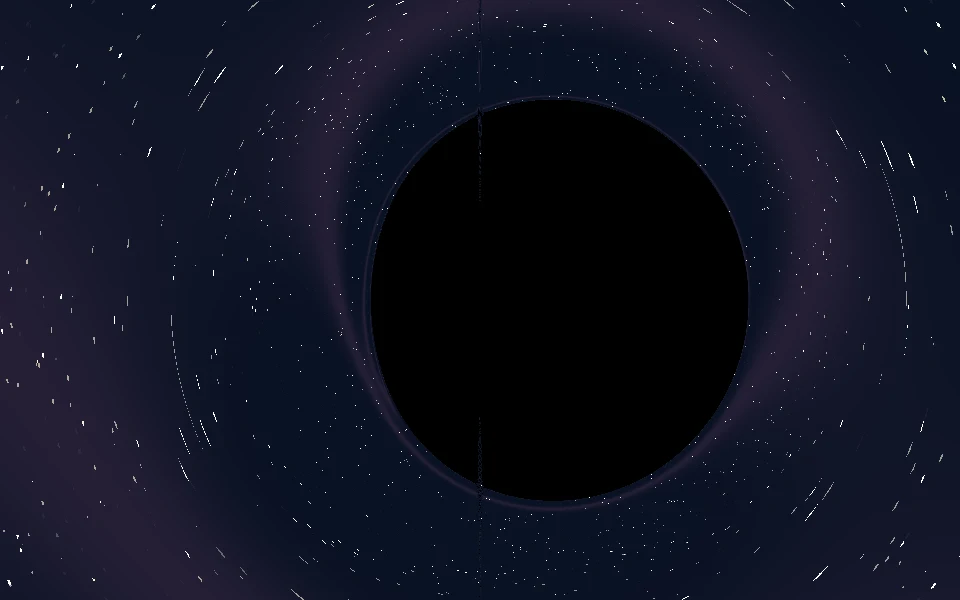
We have explored black-hole shadows and gravitational lensing from different viewing perspectives using numerical curved-spacetime light-path simulations. The public study shows one of these rendered experiments. VIEW LIGHT-BENDING STUDY ↗
An experimental three-body simulation explores how multiple gravitating bodies evolve together under chosen initial conditions and model assumptions.
A scalpel-cutting experiment uses volumetric tetrahedral deformation and material contact to study a soft-body incision, rather than relying on an animation-only cut. This remains an experimental mechanics study, not a clinically validated surgical model. VIEW SOFT-BODY STUDY ↗
Wind generation and wind-turbine modeling have been explored as engineering scenarios. Physical fidelity and predictive use depend on model assumptions and validation.
An architectural experiment used AI assistance to construct and refine a complete house scene, followed by native high-quality rendered footage in Neeuman. The collaboration page shows recorded modeling and rendering work. VIEW HOUSE WORKFLOW ↗
A hypothetical Roadster-inspired flight study explored programmed thrust and flight behavior with numerical telemetry. This is a software-model experiment, not real vehicle certification or a Tesla-endorsed performance result.
Exploratory rocket launches, lunar landing scenarios and Apollo-inspired mission modeling extend the same simulation approach into space-flight questions.
Field and machinery studies have brought farm environments, tractors and harvesting workflows into the same scene, combining model geometry with operational demonstrations. VIEW AGRICULTURE ↗
A factory demonstration brings conveyors, equipment and modeled production flows into a shared environment. Some areas use native physics states while other process details are visual or simplified. VIEW FACTORY STUDY ↗
Robotic mechanisms and actuator-driven motion have been part of the experimental models, supporting future robotics workflows within the desktop environment. VIEW ROBOTICS ↗
Simulation results depend on model assumptions, numerical settings and validation. Examples described here are experimental work; a recorded render does not by itself establish physical accuracy, clinical readiness or deployment at an operating plant.
KEEP EXPLORING