
Simulate biology.
From a single moving cell to a simple nervous system, modelled entirely in Neeuman.
Life, modelled in motion.
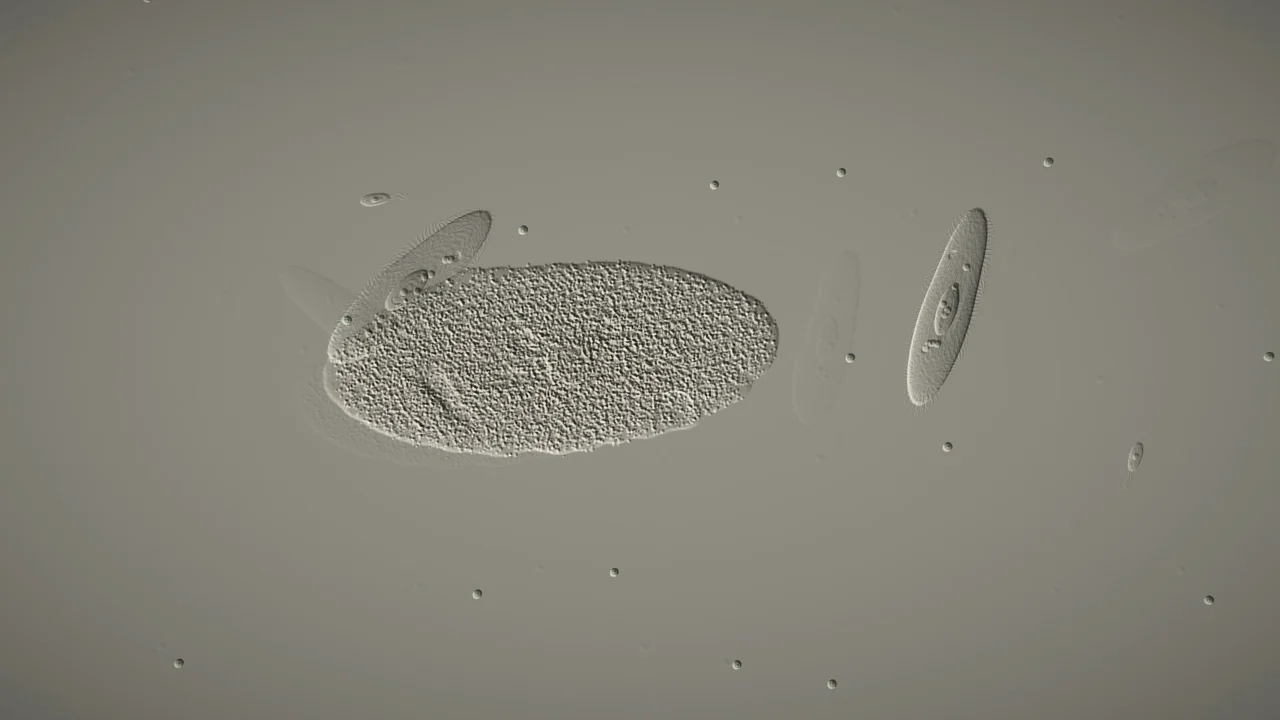 00:12
Movement and shape
A particle-based cell changes shape as it crawls.
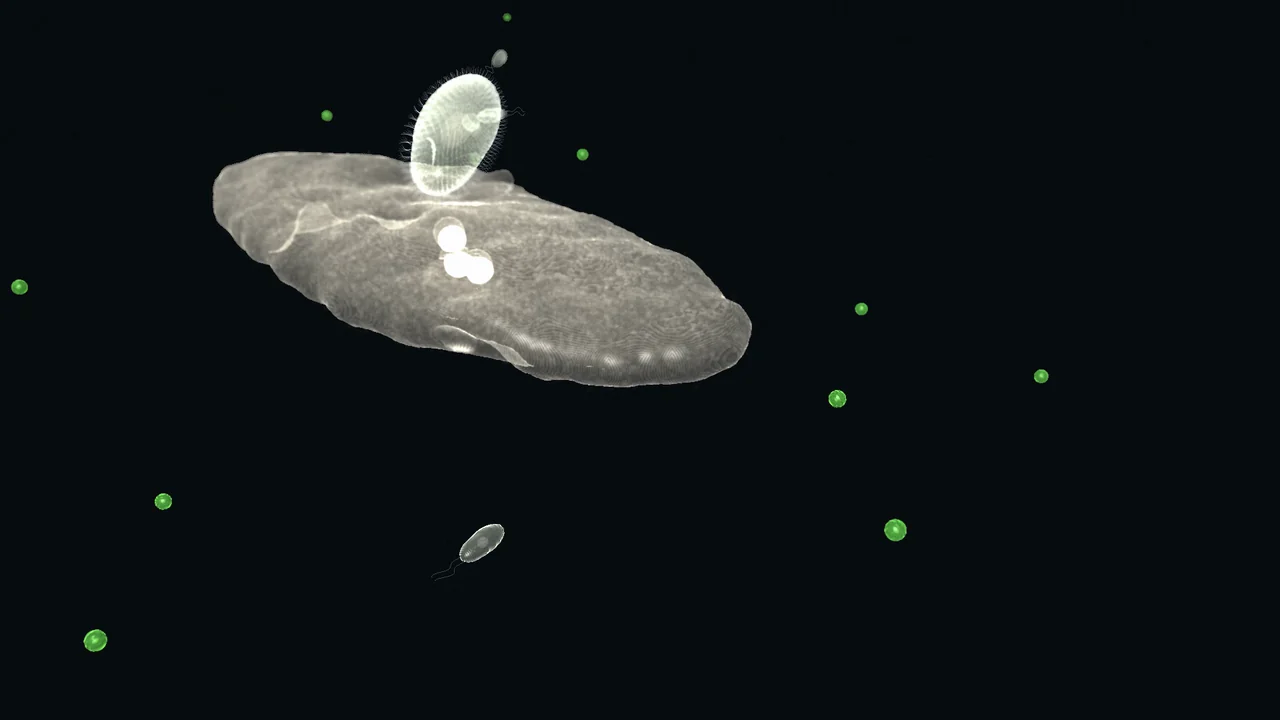 00:24
Engulfment
Modelled contact and enclosure, not molecular digestion.
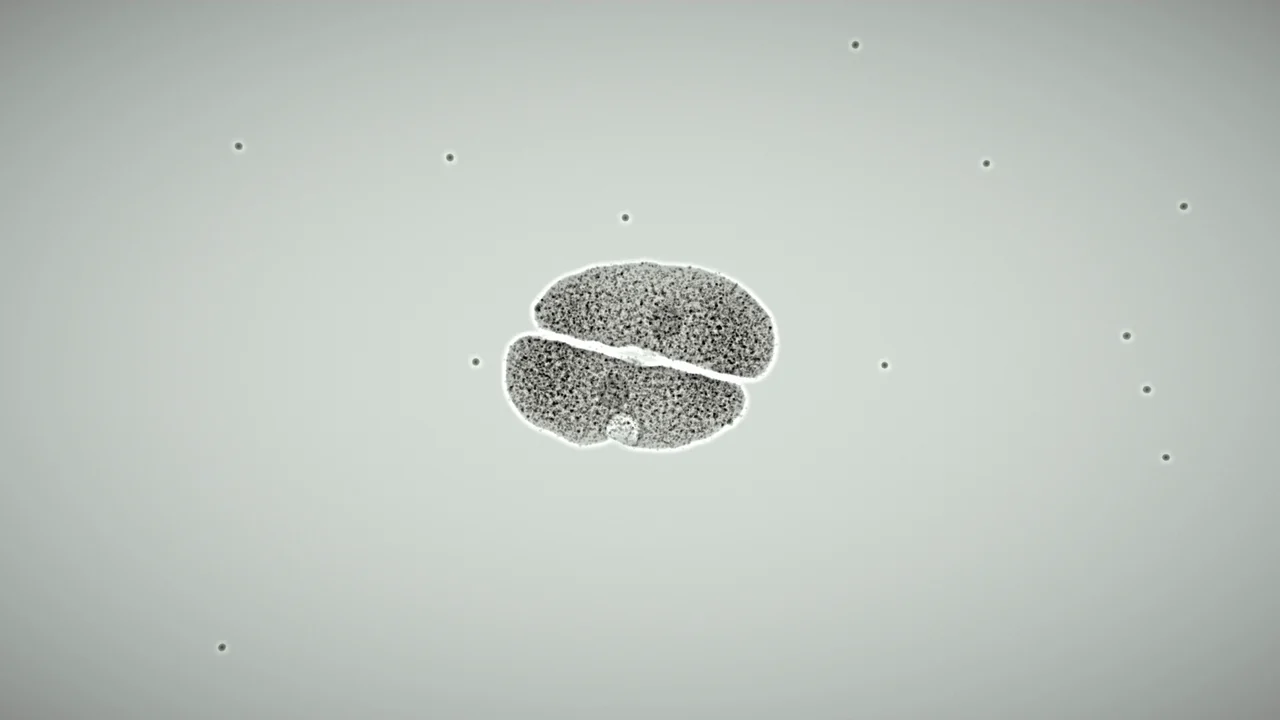 00:55
Cell separation
Division of a simplified cell, not a mitosis model.
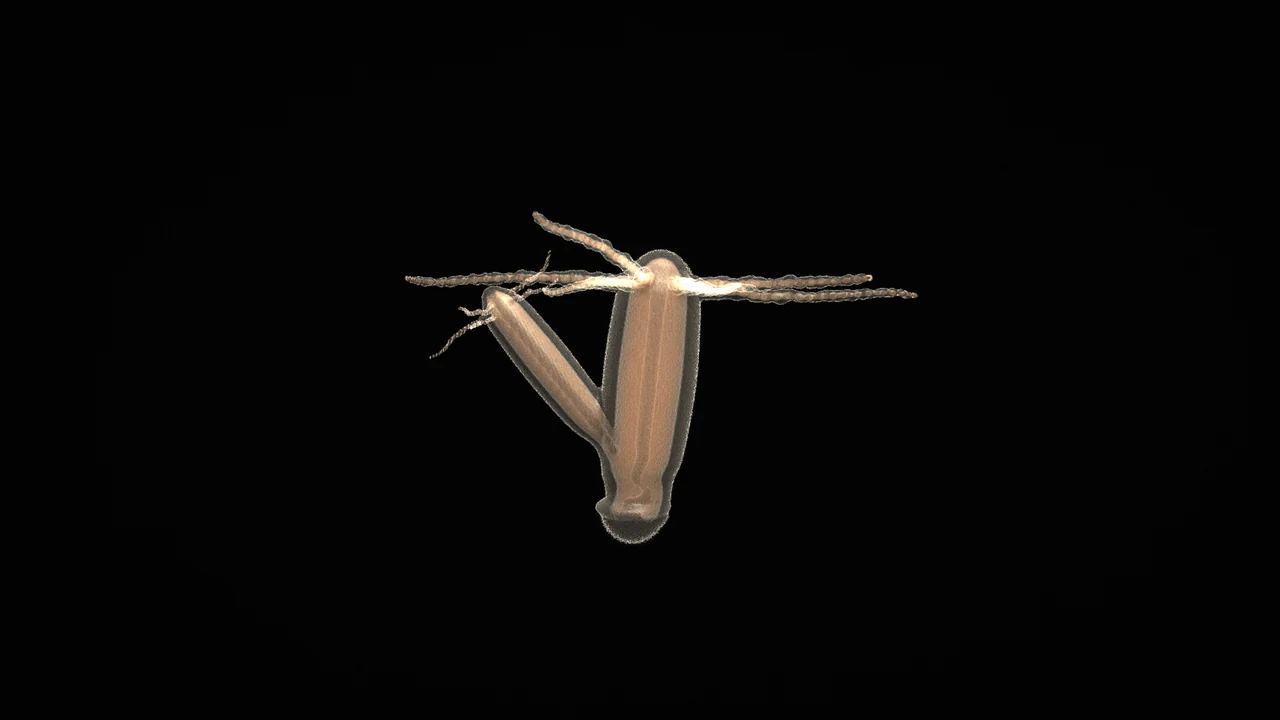 01:24
Hydra‑like motion
Tentacles, body column and budding from a polyp model.
Project Lawy: artificial life, alive on screen.
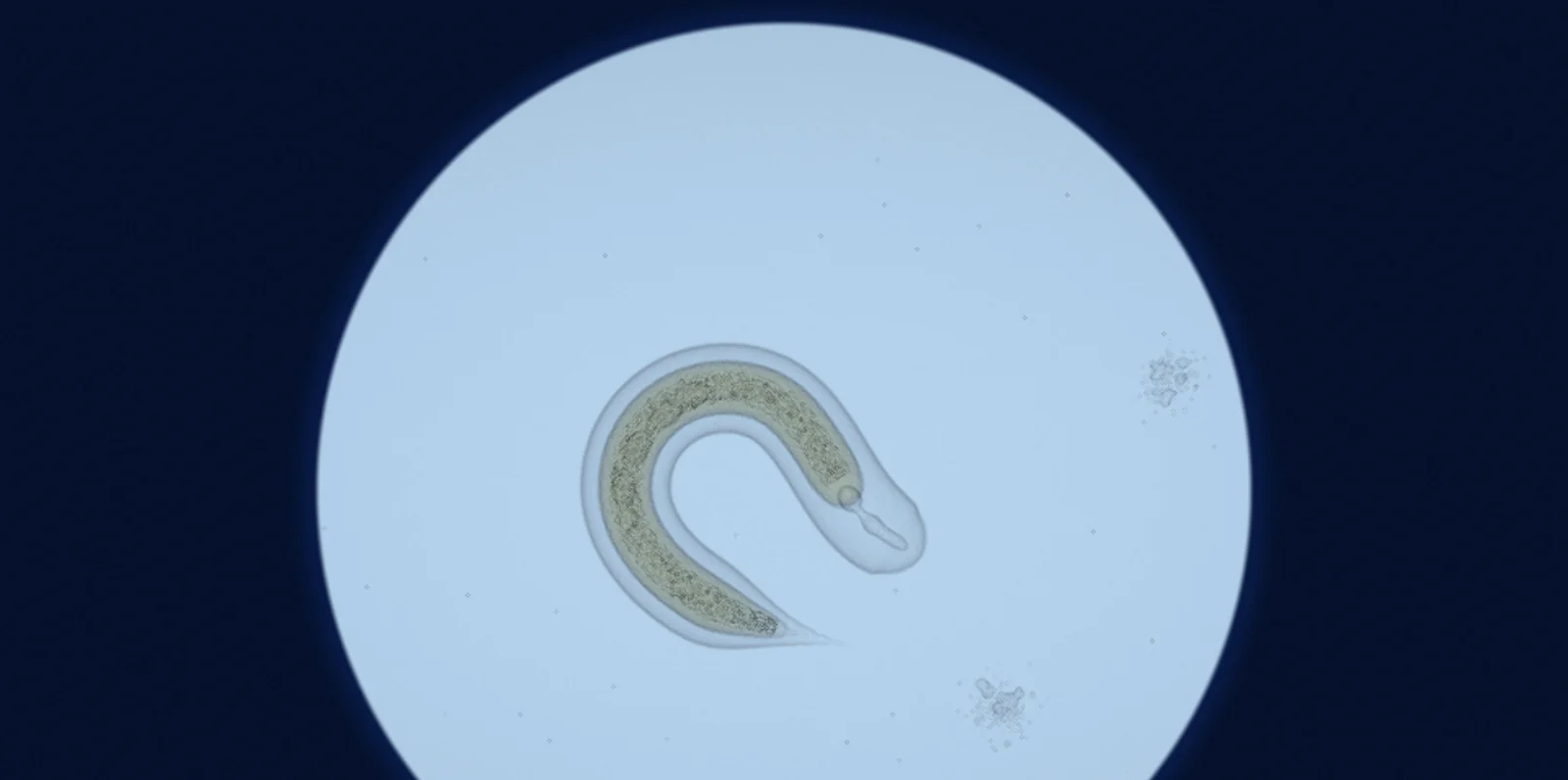
Meet Lawy, a C. elegans worm whose brain is the real animal’s 302‑neuron wiring, running a simulated body in real time.
Meet LawyNEW / RESEARCH RECORDS
What the model made visible.
Two studies, shown with their results and their limits.
 POPULATION BIOLOGY
Four founders.
257 individuals.
Reproduction and neural development across twelve simulated generations. Fitness gain was not detected.
Explore the study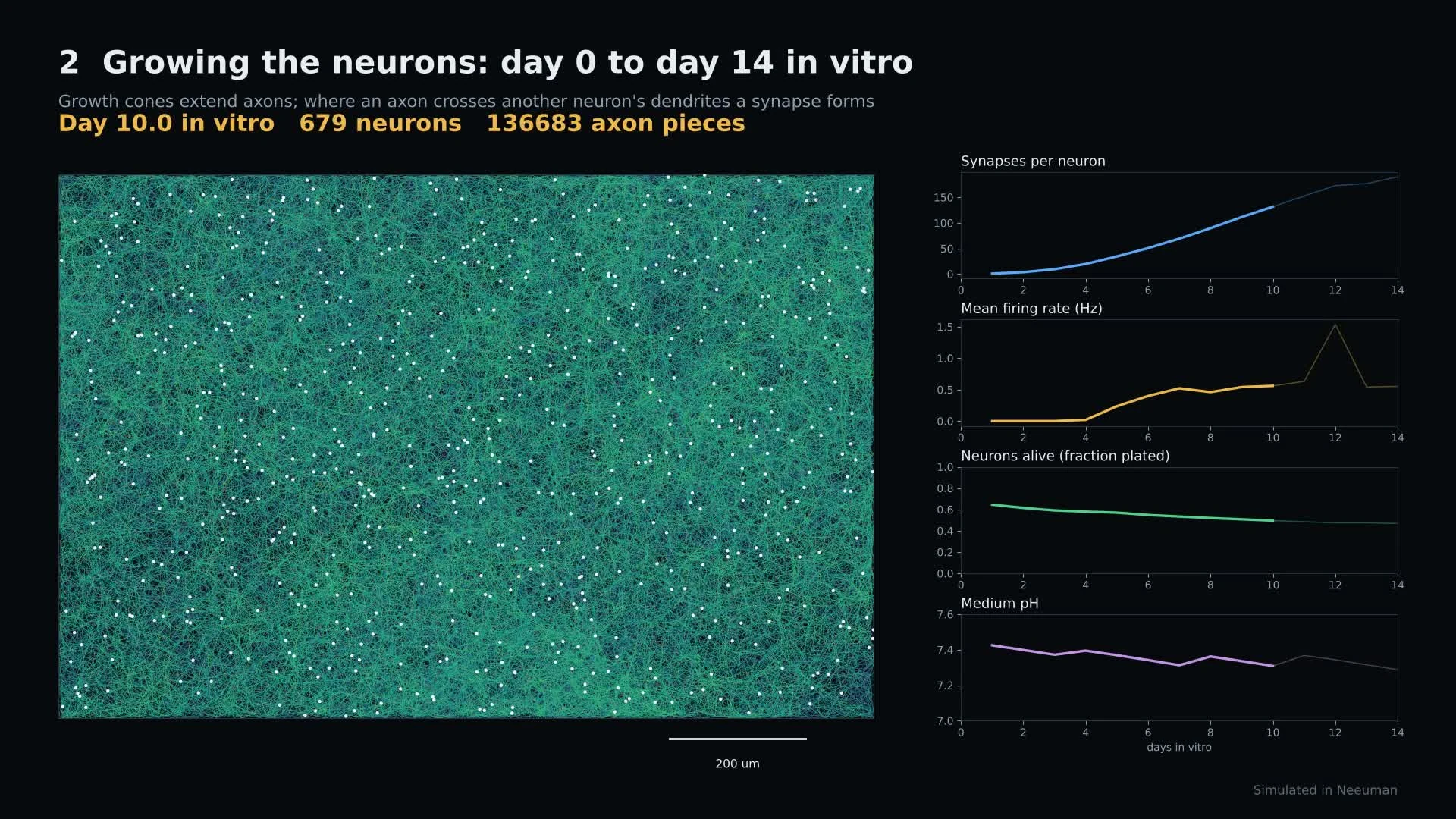 NEURAL CULTURE / FILM
Grow the network.
Test the loop.
A simulated cortical culture plays Pong. The recorded result showed no learning.
Watch the studyA voice from physics.
“Hello, I am Neeuman.” Folds, airflow and a vocal tract, all simulated.
Vocal folds
Two masses; upper and lower edges move out of phase.
Glottal airflow
The opening between the folds shapes the air.
Vocal tract
Waveguides add oral and nasal resonance.
Material that answers contact.
A layered soft material meets a blade: deformation, then released connections. A mechanics study, not a surgical prediction.
Explore this studyMeasured against known behavior.
Internal benchmarks, 17 November 2026; not an independent validation.
- Axon firing; reference about 68 Hz
- 67.5Hz
- Cardiac output at 117/75 mmHg
- 5.1L/min
- Vessel-flow error against Womersley
- 0.1%
- Vocal folds; reference about 125 Hz
- 130Hz
Eighteen engines, five scales.
Gene circuits to whole organisms, each a Neeuman physics aspect.
Gene circuits and metabolism
Coarse-grained biomolecules
Excitable cells and axons
Patterns in tissue
Multicellular populations
Amoeboid movement
Spiking neural circuits
Whole-brain networks
Hydra nerve net
Heart and circulation
Respiration and blood gases
Blood vessels and flow
Optics of vision
Voice and larynx
Muscles and joints
Population genetics
Plant morphology
Polyps and budding
Explore the chemistry behind materials.
Biology here is a beginning, not a complete human: simplified models at many scales, honest about what they are.