
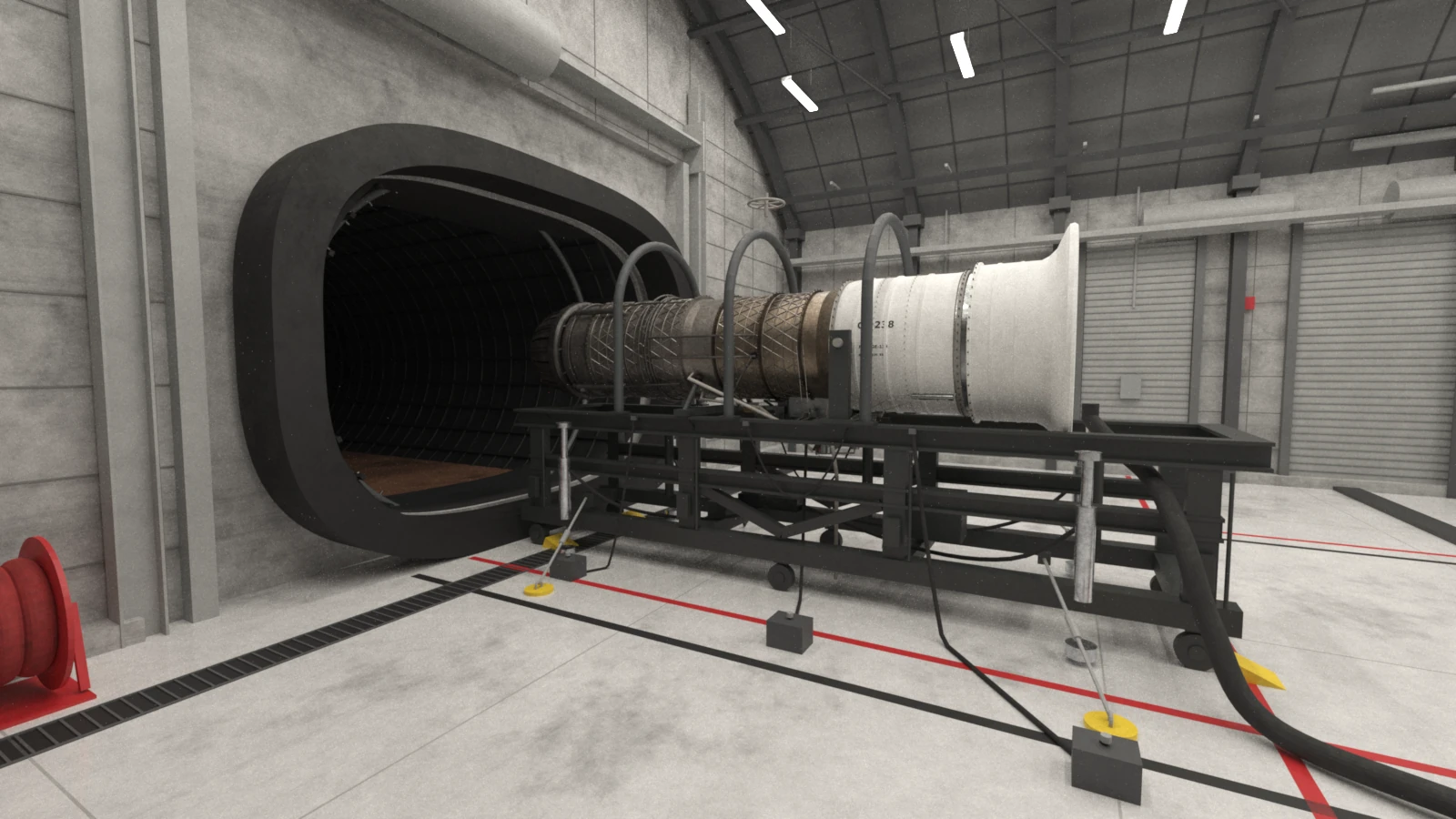
The whole engine, run as one model.
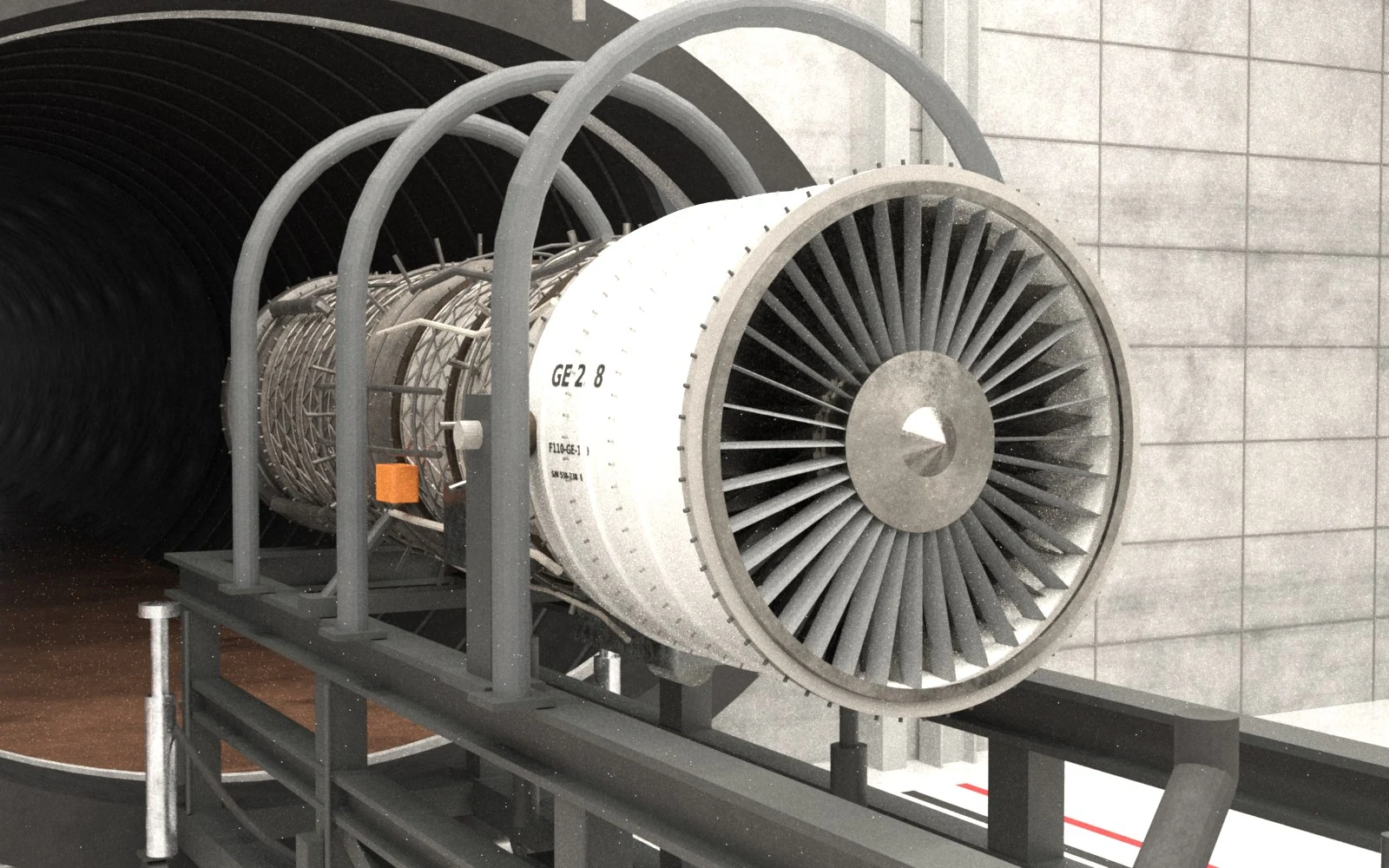
An F110‑class turbofan and its test cell, modelled and computed entirely in Neeuman.
Sixty seconds on the stand.
Run v14 from three viewpoints, with its own trace drawn beneath it as it plays. Its sound is simulated by the Neeuman sound engine.
- Run time
- 60.0 s
- Net thrust
- 131.5 kN
- Fan and core speed
- 100.0 / 97.5 %
- T4 and T7
- 1,484 / 2,180 K
- Main and reheat fuel
- 1.23 + 5.25 kg/s
- Maximum reheat thrust
- 131.5kN
- Military thrust
- 77.0kN
- Augmentor exit
- 2,180K
- Airflow
- 122.2kg/s
Settled holds of run v18L, shown in metric and US units in turn.
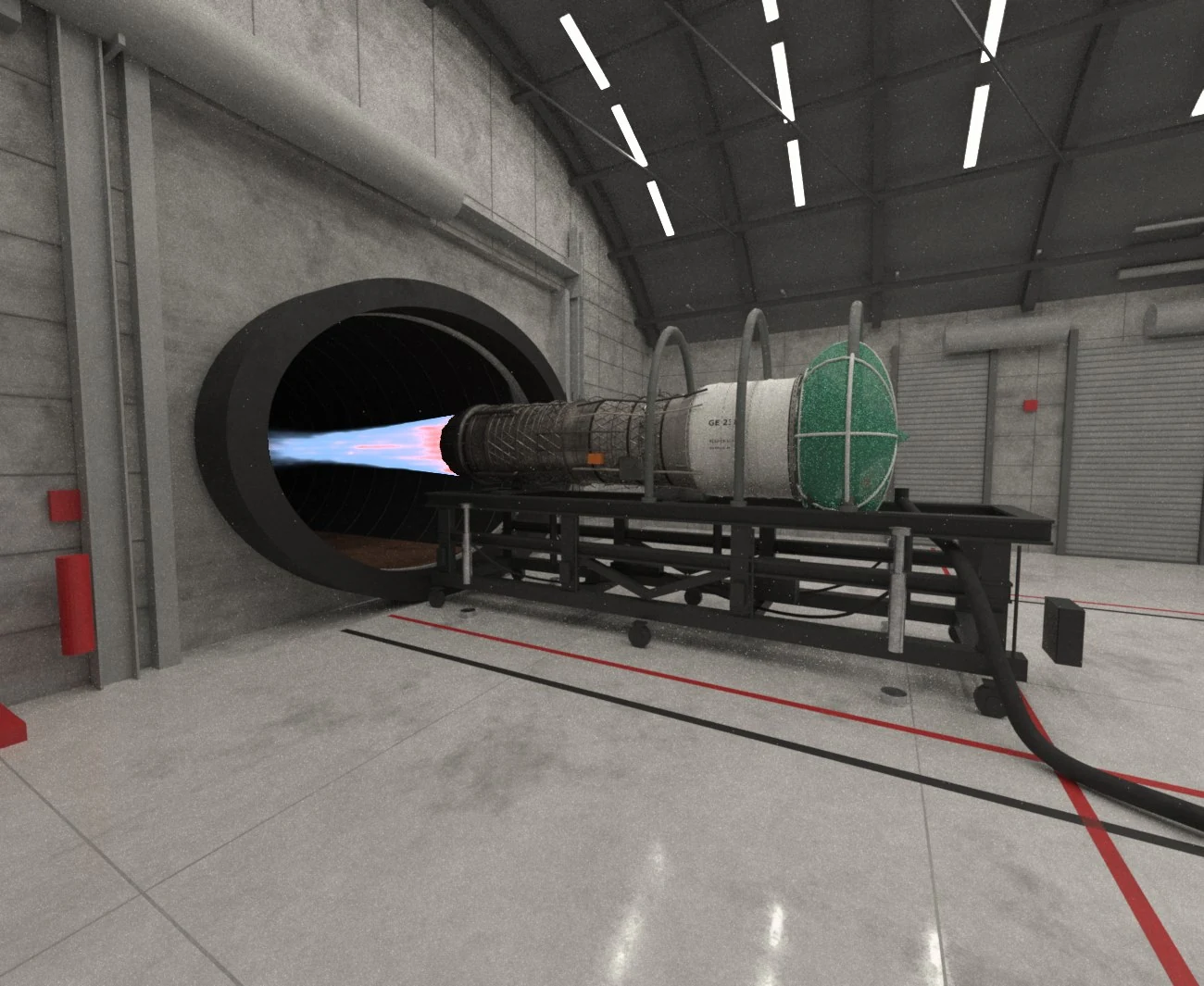
This flame is computed, not drawn.
Scroll to light the afterburner. Click the flame to play the full run with its sound.

- Run time
- 55.9 s
- Net thrust
- 131.5 kN
- Augmentor exit
- 2,180 K
- Nozzle throat
- 0.544 m²
- Stage
- Core and fan lit
Run v18L with its sound, from maximum reheat to fuel off. At the 90 s cut, one 0.1 s step carries a fuel-flow transient we are fixing.
Engine state
Pressures, temperatures, fuel and nozzle area, every 0.1 s.
Chemistry
Cantera equilibrium of a Jet‑A surrogate.
Jet structure
Prandtl–Pack, Lau and Papamoschou–Roshko.
Light
Soot and CO–O glow, 380 to 780 nm.
Made entirely in Neeuman.
Modelled, run, solved, rendered and heard in one system.
- channels recorded every 0.1 s
- 302
- seconds, cold start to shutdown
- 180
- chemical species, 553 reactions
- 100
- burning instants solved for one flame
- 1,162
- flame frames rendered
- 3,363
- acoustic outputs into the sound engine
- 140
- sound sources
- 11
- wall reflections traced
- 294,740
Run v18L and the run v15 sound, counted from the model’s own files.
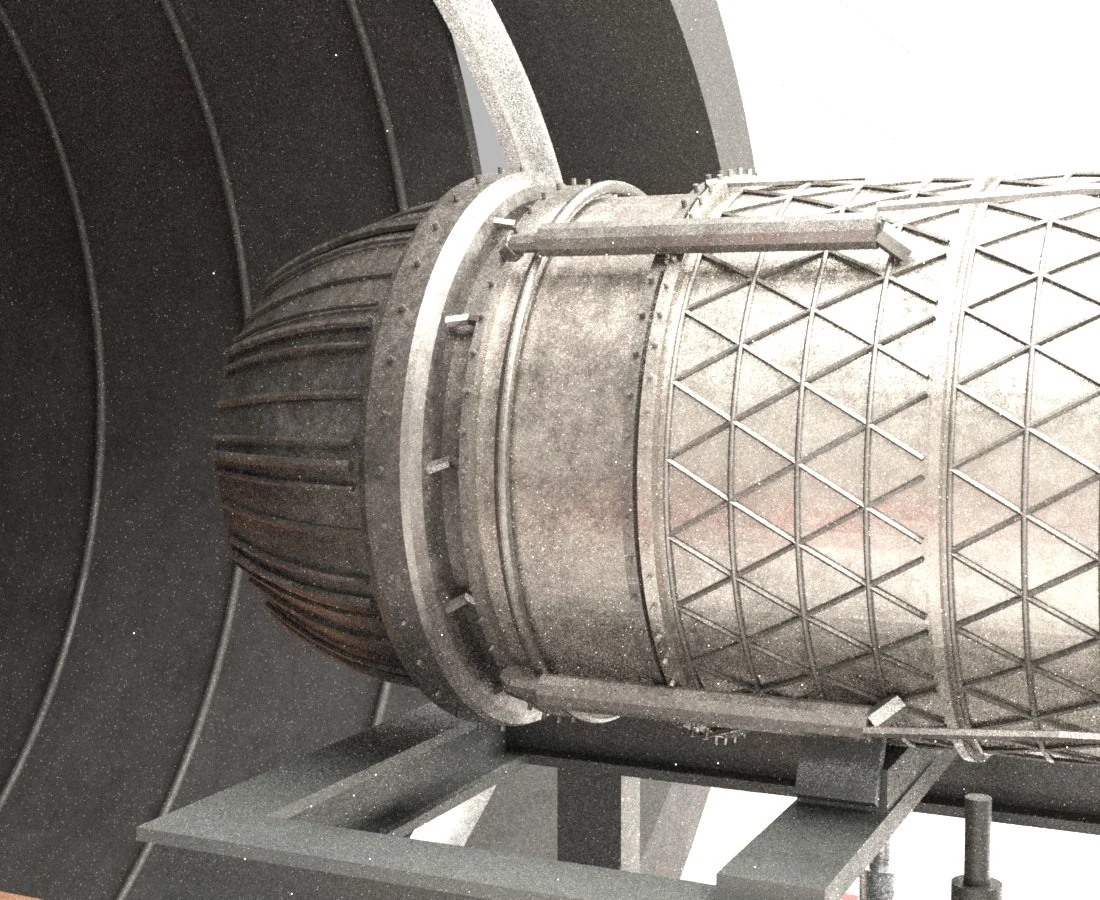
Every part has a job.
Path traced from the model that runs.
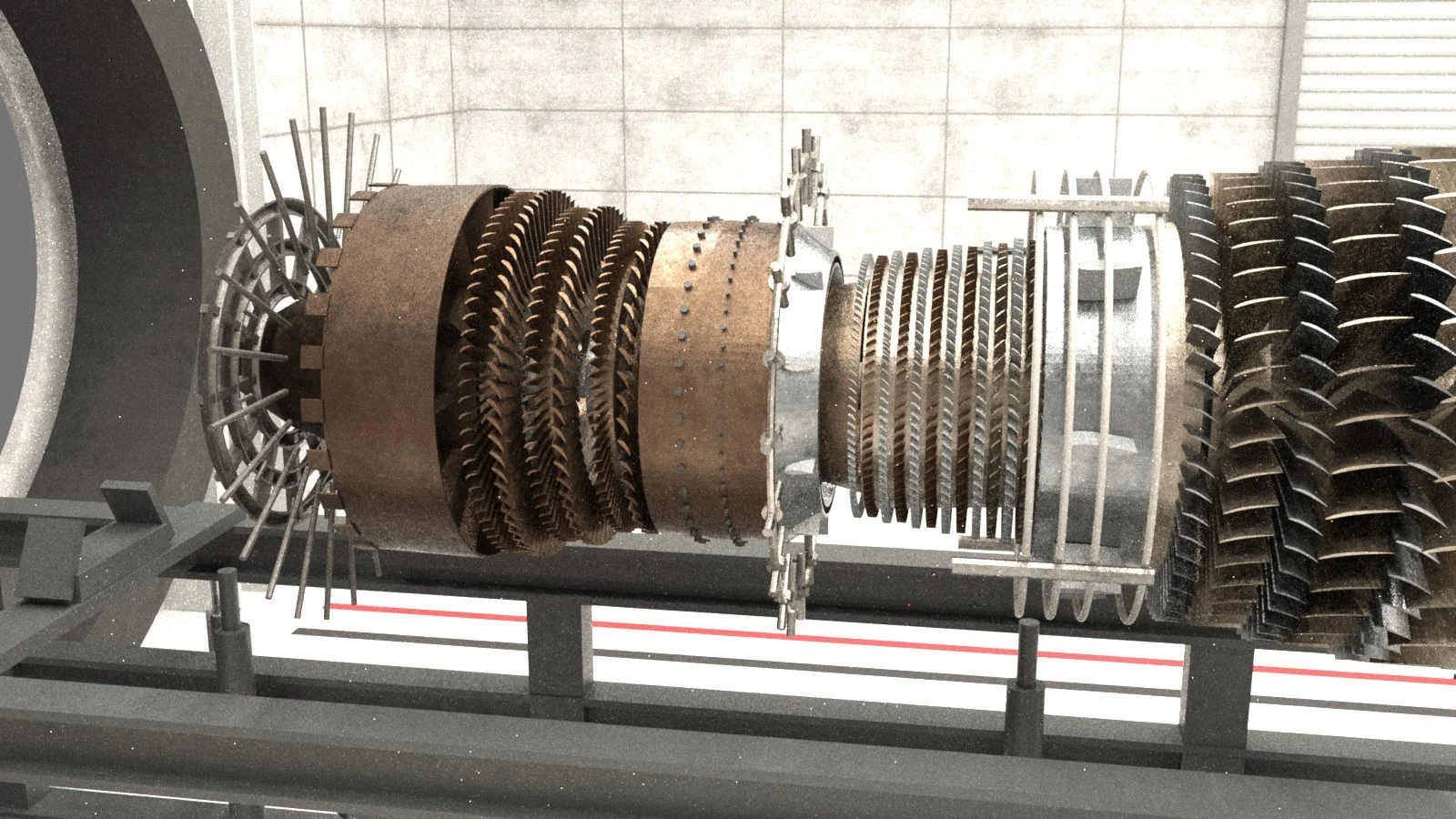
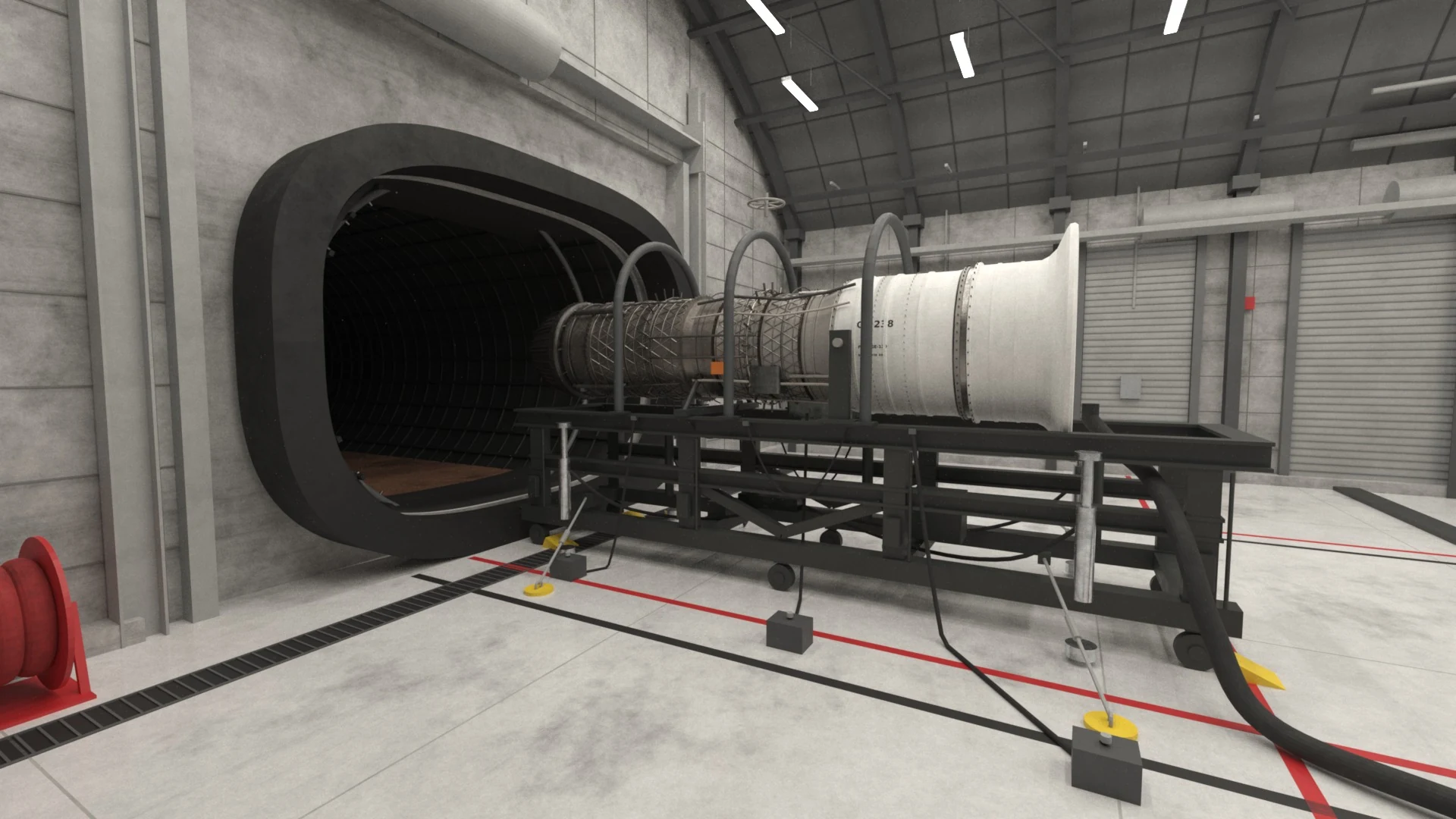
Every sound is simulated.
The Neeuman sound engine hears the running engine, not a recording: 140 of its outputs, every 0.1 s, become pressure at the camera.
- Sources
- Blade tones, turbine, gearbox, starter, igniter, combustion, jet mixing, Mach waves and shocks.
- The room
- 294,740 reflections off walls, tube and floor; 3.2 to 4.4 s of reverberation.
- Loudness
- 153 dB at the camera at full reheat.
Against the published figures.
Every gap becomes the next physics fix.
| Quantity | Published | Neeuman twin | Difference |
|---|---|---|---|
| Maximum thrust | 129 kN class | 131.5 kN | +1.9 % |
| Airflow | 122.4 kg/s | 122.2 kg/s | −0.2 % |
| Overall pressure ratio | 30.7 | 29.6 | −3.6 % |
| Bypass ratio | 0.76 | 0.83 | +8.6 %, open |
Published: GE F110‑GE‑129 datasheet; pressure ratio from MTU Aero Engines. Twin: the settled maximum‑reheat hold of run v18L. An independent Neeuman model, not certified, and not affiliated with or endorsed by the engine’s manufacturer.
First, a J79‑class turbojet.
The same test-cell workflow ran it first; its fixes went into Neeuman.
Bring your engine and your cell.
For teams who design, overhaul and test gas turbines.